
Riding Go-Karts in Tokyo with a Photography-Loving Companion: How the City Looks in Daylight, at Dusk, and After Dark
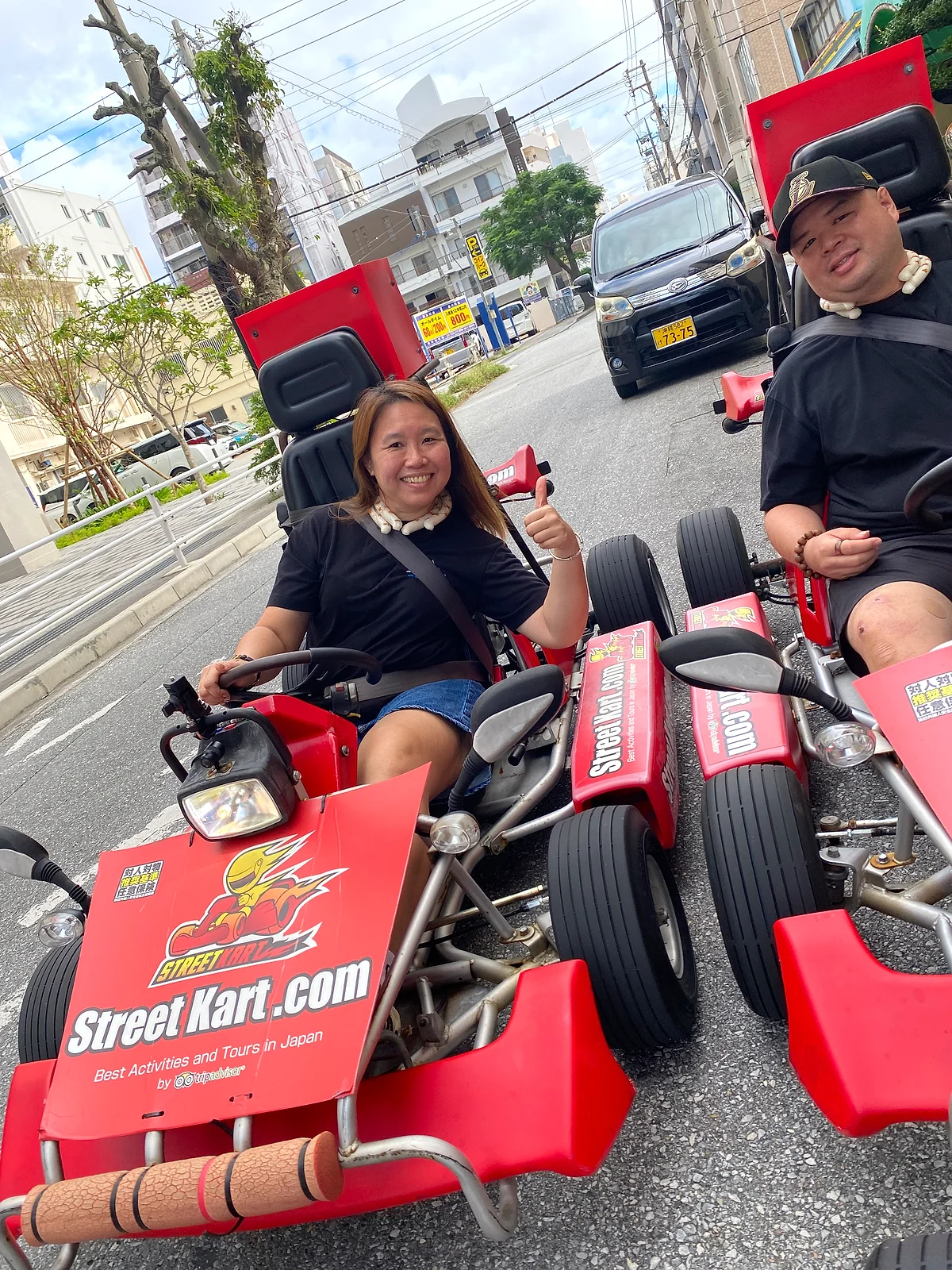
Riding Go-Karts in Tokyo with a Photography-Loving Companion: How the City Looks in Daylight, at Dusk, and After Dark
"Hold on. The colors are about to change."
When the travel companion who never puts their camera down says that, the trip planning shifts from "Where should we go?" to "What time should we go?"
The same Tokyo intersection can look completely different by day and by night. If you're adding a go-kart experience to your plans, the time slot you choose changes the photos you can take. It also changes how tired everyone in the group gets. That matters even more when you're traveling with a group of mixed ages and energy levels.
This article splits the day into three windows: "while it's still light," "as the sun goes down," and "after dark." We'll go through them one at a time: which Tokyo location gives you which views, and what the people who aren't driving can do in the meantime.
Why Photographers Ask "What Time?" First
For anyone who loves photography, light matters as much as the subject.
On a sunny afternoon, building colors and sign lettering come out sharp. As the sun sinks, the sky's colors show up in the glass of the buildings. In just a few dozen minutes, the colors of the whole city shift. Once it's dark, the lights take over. Bridges, towers, and neon start to glow, and things you barely noticed during the day suddenly stand out.
On some beaches in Brazil, people reportedly applaud together the moment the sun sets. In Tokyo, you might watch the sky change color quietly from somewhere high up. Clapping or silent watching, the feeling is the same: you're enjoying the moment the light changes.
Now, one important rule.
While driving the kart, do not hold up your smartphone or camera.
While you're moving, keep your eyes on the road ahead and what's around you. It's enough to soak in the scenery. Take your photos before or after the tour, once you're out of the kart. Your photography-loving companion is exactly the person to tell this to first.
One more thing. Sunset times shift quite a bit with the seasons. When we talk about a "dusk session" or a "night session," what clock time that means depends on when you're traveling. Check the official website for how departure times work before you build your plan.
In Daylight, You Capture "Color" and "Architectural Detail"
During the day, subjects with color and texture look their best.
The route from the Akihabara location passes Tokyo Station's Marunouchi Station Building and Ginza. The Marunouchi Station Building is a red-brick structure that opened in 1914, and its restoration was finished in 2012. In sunlight, you can clearly see how the red brick works with the white ornamentation. The Wako clock tower at the Ginza 4-chome intersection and the dense rows of signs in Akihabara Electric Town are also easy to take in detail by detail in daylight.
From the Shibuya location, the route passes the zelkova-lined avenue of Omotesando. On a clear day, you can see a row of distinctive buildings by well-known architects behind the green leaves. If you're into design, just comparing the shapes and materials of each building can be a lot of fun.
At midday on a sunny day, shadows can come out too harsh. If you're photographing the red-brick station building, stand with the sun at your back to bring out the color. On lightly overcast days, on the other hand, the light is soft and even, so the fine texture of the brickwork and the lettering on signs are less likely to get lost. When the sky is whitish, the trick is to keep the sky small in the frame and fill it with the building.
For groups with different energy levels, daylight is also the easiest time to get around. Kanda Myojin Shrine is about a 10-minute walk from the Akihabara location, and Ueno Park is about 5 minutes away by train. Those who aren't driving can spend that time wandering the museums in Ueno Park at a relaxed pace. That's one way to split up.
After the tour, the photography lover should head over to Tokyo Station. It's about 5 minutes by train from the Akihabara location, or about 20 minutes on foot. Depending on the course, they can now stop and photograph the front of the station building they just saw while driving. "The memory of seeing it while driving" and "the shot taken while standing still": going home with the same building both ways is pretty special.
That said, on very hot or very cold days, moving around in the daytime takes the most out of you. Check the weather forecast for your travel dates and plan shorter walking distances. Older companions will have a much easier time too.
As the Sun Goes Down, There's Something to See Even for Non-Drivers
Dusk is when photographers get the most restless.
The sky shifts from blue to orange and from orange to purple, one color after another. It won't wait for you. So if you're going to stop and shoot, choosing your spot matters.
About a 10-minute walk from the Shibuya location is Shibuya Scramble Square. At 230 meters, it's the tallest building in Shibuya. It has an observation facility called "Shibuya Sky," which includes the rooftop.
How about having the non-driving companions wait for the sunset here during the tour? Down below, the windows of Shibuya's buildings light up one after another, and the neon gradually spreads. The people waiting get their own highlight too.
If the photography lover is also driving, decide in advance whether to spend the short dusk window shooting or driving. If you want to combine dusk photography with the tour, check the departure times for your travel date on the official website. With the Tokyo Bay location, one option is to explore Odaiba first, then head to the Shinkiba shop (about 10 minutes by car from Odaiba; the shop is about an 8-minute walk from Shinkiba Station) and join an evening tour. The tour ends back at the shop, so once you return the kart, go back to Odaiba. From the waterfront area, you can photograph the full Rainbow Bridge lit up in seven colors. Dusk sky or night lights? Work backward from the light you want to shoot and pick your session.
If you want to shoot the Scramble Crossing from above, the rooftop of MAGNET, which faces the crossing, is also a well-known photo spot. You can capture the moment the light changes and the wave of people starts moving all at once, along with the colors of dusk.
The Shinagawa location is about a 3-minute walk from Kita-Shinagawa Station. It's surrounded by the old-fashioned Kita-Shinagawa shopping street. In the evening, the shop-front lights and the voices of shoppers give the street a warm feel. Those who can walk a bit should try going to Tennozu Isle along the canals (about a 20-minute walk). You can photograph lights reflected on the water. For anyone who finds walking hard, atre Shinagawa, directly connected to Shinagawa Station, is a good place to rest. Splitting into two groups works perfectly well.
One tip for shooting dusk:
While the sky is still bright, try setting the exposure a little darker. The sky's colors stay intact instead of washing out. If you lock the color setting (white balance) to "Daylight," the oranges come out beautifully.
Just like a samba rhythm gradually speeding up, the dusk sky changes at a quick pace. When you think "that's nice," don't hesitate. Take a bunch of shots. You can choose later.
After Dark, Rainbow Bridge and Tokyo Tower Take Center Stage
If night views are what you're after, look at the Tokyo Bay location (Shinkiba) route. It passes Rainbow Bridge and Tokyo Tower.
Rainbow Bridge is a 798-meter suspension bridge that spans Tokyo Bay. At night, it lights up in seven colors. Tokyo Tower is a 333-meter broadcasting tower completed in 1958. Its red-and-white steel frame stands out cleanly against the night sky.
Add the lights of the waterfront warehouse district and Odaiba's buildings, and you get a scene completely unlike the daytime. The route from the Shinagawa location is also said to offer views of Rainbow Bridge and Tokyo Tower in the distance.
Tours follow a set course led by a guide. You don't have to hunt for night-view spots yourself, because the scenery is lined up along the course. That takes some pressure off. If you're driving, keep your eyes forward and feel the lights streaming past. Save the photos for after the tour, in Odaiba's waterfront area.
If you shoot night views after the tour, camera shake is the main thing to fight.
When using your smartphone's night mode, rest your elbows on a railing or barrier and stay perfectly still until the shot is done. With a camera, don't push the ISO too high, and take several shots in a row. That makes it more likely you'll get one without blur. In crowded places, before setting up a tripod, pause for a moment to make sure you won't be in anyone's way.
When shooting night views through glass, like at an observation deck, put your lens right up against the glass. Covering the area around the lens with your palm or dark clothing cuts down on reflections from indoor lights.
Rainy nights aren't all bad for photographers, either. City lights reflect on the wet pavement, giving you a different shot from a clear night. Tours are said to run as scheduled in light to moderate rain, with raincoats provided. They're canceled in heavy rain or typhoons, so if the weather looks doubtful, check the notices on the official website.
Also, be mindful of energy levels for night sessions. Older companions who have been sightseeing since midday will be pretty tired by nighttime.
The Tokyo Bay location is about an 8-minute walk from the nearest station, Shinkiba. The shop has no parking, so use trains or other public transportation to get there and back. Look up your return train times and the route back to your hotel in advance. That way, after enjoying the night views, everyone can end the day feeling good.
Making Sure Everyone in a Group of Mixed Ages and Energy Levels Has an Easy Time
The first thing to check is who can drive.
This article won't make definite claims about age requirements or what kind of driver's license you need. Check one by one whether each person's license allows them to drive on the official page about driver's licenses. For detailed participation requirements, the official website is the most reliable source.
Karts are single-seaters. Two people can't share one kart.
So if some people won't be driving, decide first where they'll spend that time. Ueno Park, Shibuya Sky, and the Kita-Shinagawa shopping street, all mentioned above, work well as "destinations for those waiting." With a plan like that, "time spent waiting" becomes "time spent enjoying something else." Every location has restrooms, and there's a convenience store within a 5-minute walk. Plan your breaks in advance too.
If the photography lover is driving, decide ahead of time how to handle the camera. Only a small bag can go on the kart. The shops have lockers for small items, but they aren't suited for large luggage like suitcases. If they're carrying lots of extra lenses or a tripod, one option is to leave them with someone who isn't driving. For clothing, closed-toe shoes and clothes that are easy to move in are the basics. It can get chilly after sundown on night sessions, so bringing an extra layer suited to the season is a good idea.
Guidance on tour day is basically in English. Japanese or other languages depend on the staff that day, so they aren't guaranteed. If someone in your group is nervous about English, try contacting them in advance through the official website. Even if you don't understand every word, smiles and gestures go a long way. Still, some people want to properly understand the explanations. Those are exactly the people who'll feel more at ease if they check in advance.
Bookings are accepted via Facebook, LINE, and email (booking@streetkart.com). Weekends tend to fill up, so once your dates are set, it's best to book early. Cancellations up to 7 days in advance are said to be free. If you're on a group trip where plans tend to change, that's worth keeping in mind. Check the official website for the detailed terms.
What Street Kart Offers
Here are the points worth looking at when you plan a trip around time slots with a photography-loving companion.
The feeling of riding the kart.
This is about feeling, not logic. You drive while looking up at the buildings and feeling the size of the intersections around you. Trying it is quicker than having it explained.
Track record.
As of November 2023, across all locations, there had been over 150,000 tours, over 1.34 million customers, and over 20,000 reviews, with an average rating of 4.9 out of 5.
The website is available in 22 languages.
There are 7 locations in Tokyo.
However, the two Akihabara shops are in almost the same place, and so are Shibuya and Shibuya Annex. They aren't spread across seven separate places. Even so, you can pick a location to match the time of day you want to shoot: Akihabara for red brick and Electric Town, Shibuya for the crossing and the tree-lined avenue, Tokyo Bay for waterfront night views, and Shinagawa for nearby canals and shopping streets.
Choosing the Light Means Choosing the Whole Group's Day
Will you go when the red brick looks its reddest? When the sky keeps changing color? Or when the bridge lights up in seven colors?
The decision doesn't have to rest on the photography lover's taste alone. Think about the stamina of older companions who've been walking since midday, how the non-drivers will spend their time, and the train home. Lay it all out on the table, and the right time slot for your trip tends to show itself.
Start by looking up the sunset time for your travel dates. Then check departure times and participation requirements on the official website, and talk it over as a group. Weekends tend to fill up, so once you've decided, get in touch early.
The night after the tour, everyone shows each other the photos they took.
"This one's great."
That's probably the best part of any group trip.
This article was originally written in Japanese and translated using AI. Some expressions may read unnaturally, and we appreciate your understanding. For the most accurate and up-to-date information, please refer to the official site at kart.st.
Street Kart is not affiliated with Nintendo or the Mario Kart series in any way. We do not provide costumes of Nintendo characters, and such costumes may not be worn during tours even if brought by participants.