

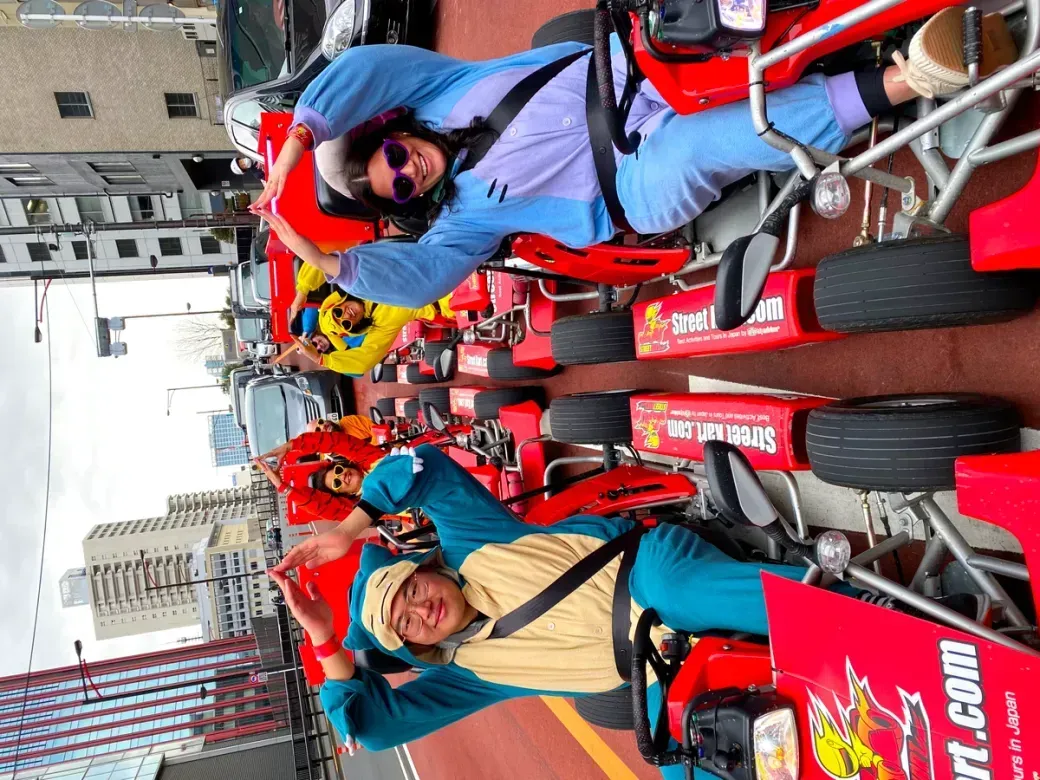
The Moment the Light Changes, Shibuya Comes Alive
Shibuya Scramble Crossing. Up to 3,000 people cross this intersection during a single green light — but how many have ever gazed up at it from ground level? There are plenty of ways to explore Tokyo’s classic sightseeing spots, but very few let you feel the city’s pulse against your skin while the wind rushes over your entire body. Street karting on public roads is the option that transforms your first Tokyo trip from “just sightseeing” into “a full-body adventure.”
Shibuya, Harajuku & Omotesando — Racing Through Culture’s Cutting Edge
Why You Start at Shibuya Scramble Crossing
Where should you visit first in Tokyo? Most guidebooks give the same answer: Shibuya. Watching 3,000 people crisscross the Scramble Crossing from a building observation deck is one thing — but experiencing it from a kart is something else entirely. Tours departing from Street Kart’s Shibuya location pass right by this legendary intersection. The SHIBUYA 109 sign stretching out before you, the waves of people flowing toward Dogenzaka — gazing up at Shibuya’s towering buildings from the kart’s low seat hits differently than standing on the sidewalk.
Passing Hachiko’s statue and turning onto the route toward Harajuku, the atmosphere shifts dramatically. Near the entrance to Takeshita Street, colorful signs burst into view and the sweet aroma of crepes drifts through the wind and tickles your nose. Rolling through this epicenter of Kawaii culture from a ground-level perspective delivers a sense of freedom that walking simply can’t match.
The Luxury of Looking Up at Omotesando’s Zelkova Trees
Beyond Harajuku lies Omotesando. Known as “Tokyo’s Champs-Élysées,” this boulevard features zelkova trees forming green arches overhead, flanked by high-end brand buildings on both sides. Looking up from the kart’s low seat at the distinctive facades — where architects competed to outdo one another — reveals the curves and glass reflections of these buildings in ways you’ve never noticed before. At traffic lights in front of Omotesando Hills, the guide snaps photos for you, so you can capture this moment without missing a beat.
Akihabara to Tokyo Station & Ginza — Where Old and New Tokyo Collide
Tours departing from the Akihabara location reveal another side of Tokyo entirely. Setting off along Chuo-dori with electric town signage packed overhead, you head south with the energy of subculture at your back. Within roughly 2.5 kilometers, Tokyo’s history and modernity are compressed into a single stretch.
A flash of Kanda Myojin Shrine’s vermillion torii gate enters your field of vision, and before you know it, you’re in the Marunouchi district. Tokyo Station’s red brick building, constructed in 1914, slowly reveals itself ahead of the kart. Completed its restoration in 2012, this structure showcases the Tatsuno Free Classic architectural style, and the weight of its brickwork quietly tells a story spanning over a century. It’s both Tokyo’s gateway and a destination in its own right. Looking up at the Marunouchi-side main facade from a kart is the kind of shot that photography enthusiasts live for.
Continuing south brings you to Ginza’s Chuo-dori. Passing the Yonchome intersection where the Wako clock tower stands, the refined atmosphere of this sophisticated district envelops your kart. The row of established department stores, the distinguished air of an entertainment district dating back to the Meiji era. The sheer contrast Tokyo reveals — from Akihabara’s subculture to Ginza’s elegance — in just a matter of minutes is genuinely astonishing.
Tokyo Bay Area — Rainbow Bridge and Tokyo Tower in One Go
An Exhilarating Route with Ocean Breezes
If you want to see Tokyo’s night scenery from a kart, the Tokyo Bay location tour is the way to go. Departing from Shin-Kiba and heading toward the 798-meter Rainbow Bridge, this route delivers unbeatable openness along the waterfront. The wind off Tokyo Bay brushes your cheeks, and between the engine hum, you can sense the waves nearby. Choose an evening time slot and you’ll drive through a dreamlike scene where the seven-color-lit Rainbow Bridge reflects off the water’s surface.
After crossing the bridge, Tokyo Tower’s 333-meter silhouette stretches into the sky in the distance. Completed in 1958, this steel tower is an icon of Showa-era nostalgia, yet bathed in red light at night, it radiates a mysterious presence that blends seamlessly into modern Tokyo. Looking up at the tower from near Shiba Park delivers a completely different kind of awe than climbing to its observation deck. At points where you can spot the Fuji TV headquarters building and DiverCity Tokyo Plaza in the Odaiba area, a futuristic cityscape unfolds — and experiencing Tokyo Bay’s old and new landmarks all at once is what makes this course truly special.
Why Street Kart Is the Top Choice
Among all the ways to get around while sightseeing in Tokyo, why have over 1.34 million people (as of November 2023) chosen the street kart experience? The answer is captured in one set of numbers: an average customer rating of 4.9/5.0★ with over 20,000 total reviews. These numbers speak to the quality of the experience.
Street Kart is the industry’s first public road karting operator to station guides specifically trained for international drivers. Every guide is a certified staff member who has completed specialized training — they don’t just lead the route, they snap the best photos at red lights and share fun facts about each spot, elevating the experience beyond simple transportation into a true tour.
Their commitment to safety is equally thorough. With a fleet of over 250 street karts, every vehicle undergoes regular inspections and legal compliance checks. Operations strictly follow Japan’s Road Traffic Act, and full insurance coverage is included. Even first-time kart drivers can join with confidence thanks to the detailed safety briefing before departure.
With six locations across Tokyo alone — Shinagawa, Akihabara, Tokyo Bay, Shibuya, and more — you can choose your departure point based on your hotel location or sightseeing plans. The stability backed by over 150,000 completed tours gives you the reassurance to confidently turn your first Tokyo visit into an adventure.
Tips to Make Your First Tokyo Kart Experience Even Better
Book your tour at kart.st. The most popular time slots are the sunset/nightscape rides from 5:00 PM to 7:00 PM, and weekends fill up fast — booking two weeks in advance is recommended. A valid driver’s license is required; check the details on the official license information page. Wear sneakers and comfortable clothing. Helmets and goggles are available for rental at the shop, so you can show up empty-handed (check the official site for details).
As for photos, taking pictures while driving is prohibited under Japanese law, but trained guides will have cameras ready at every red light. Professional photography is included in the tour fee, so forget about your smartphone, grip the steering wheel with both hands, and focus on soaking in Tokyo’s wind.
The buzz of Shibuya, the neon of Akihabara, the elegance of Ginza, the night views over Tokyo Bay. Visiting all these iconic spots on foot would take an entire day — but by kart, you can experience them in roughly one to two hours. Not through the window of a tour bus, not from a train platform, but looking up at Tokyo from just above street level. That shift in perspective is what transforms a first visit to Tokyo into a memory that lasts a lifetime. Your adventure starts with checking availability at kart.st.
